
They didn’t even round to the closet decimal. 3.1 is closer to pi than 3.2.
They had no idea they couldn’t legislate math and force it to obey. You are crediting them with an overabundance of brain function in relation to what evidence suggests.
they couldn’t legislate math and force it to obey
They can legislate education and enforce the curriculum through hiring of staff and purchasing of educational material. That said, this isn’t what was at issue with the legislation.
You are crediting them with an overabundance of brain function
In my personal experience as a kid who took Calculus and Physics, we were never really expected to use more precision than 3.14 for grading purposes.
Unless you’re getting into a professional degree of engineering or foundational mathematics, there’s no notable utility in establishing Pi past the first decimal or three.
If you get into the actual meat of the article
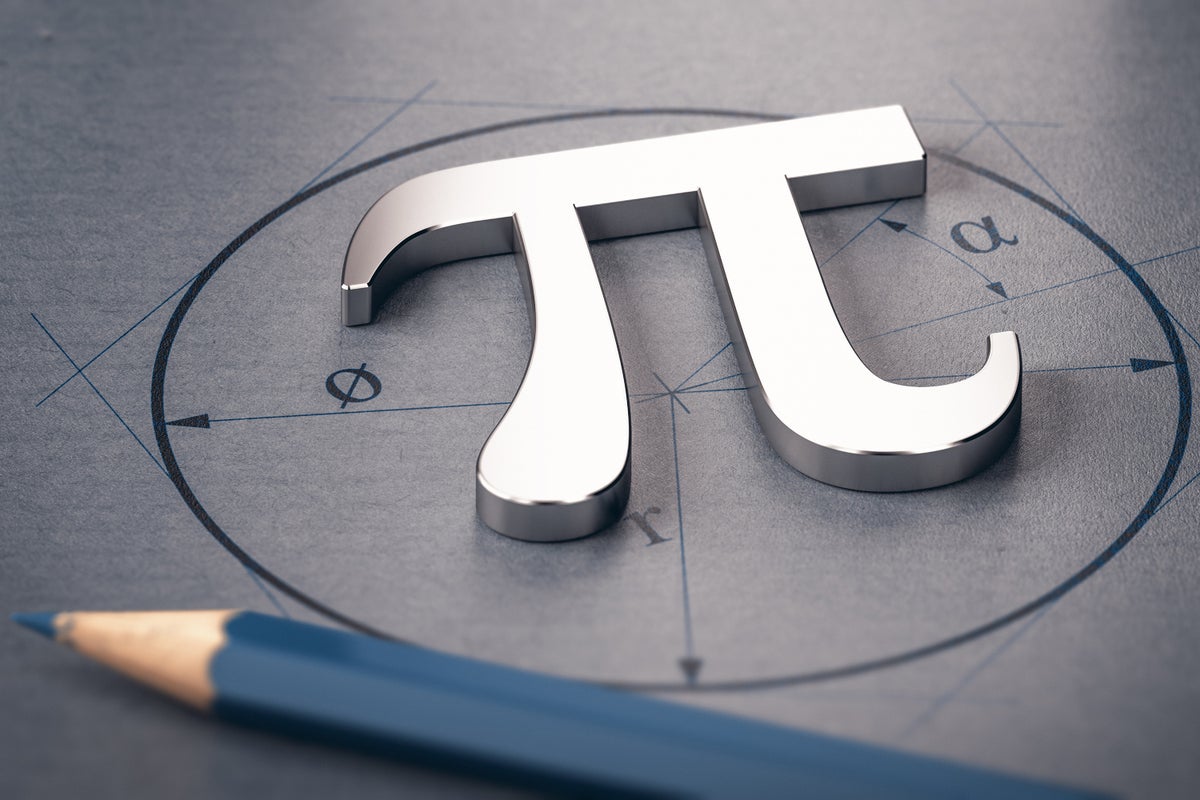
In 1894 physician and mathematical dabbler Edward J. Goodwin believed he had found one. He felt so proud of his discovery that, in 1897, he drew up a bill for his home state of Indiana to enshrine what he thought was a mathematical proof into law. In exchange, he would allow the state to use his proof without paying royalties. At least three major red flags should have prompted lawmakers to regard Goodwin with skepticism. Math research has no norm about charging royalties or precedent for legally ratifying theorems, and the supposed proof was nonsense. Among other errors, it claimed that pi, the ratio of a circle’s circumference to its diameter, is 3.2 rather than the well-established 3.14159… Yet, in a bizarre legislative oversight, the Indiana House of Representatives passed the bill in a unanimous vote.
This is incredibly dated news and largely a commentary on how easily a state legislature will rubber stamp a bill without reading the fine print.
My first thought as well
All the numbers after the 3.1 I bet they thought it made it bigger
Well, there are a lot of them…
…uh oh
Was a lot of them
Because it was a mistake in a proof, not legislation aimed to change pi
deleted by creator
This kind of anti-scientific bullshit could only happen in the U.S.A.
It was the late 1800’s. Dumb shit wasn’t in short supply in the world.
Problem is, I could also see Trump’s WWE education secretary pushing for this in 2026.
The fact that it is 100% plausible today is the worrying part.
Yes I was fully expecting the details to be “It was a Republican-sponsored bill in 1992” or similar. It’s just too damn believable.
Honestly in terms of late 1800s engineering, pi = 3.2 is accurate within 2% it’s not that scandalous
Unironically, NIST basically did this with Planck’s constant and the speed of light.
you can’t do that to pi because it’s dimensionless
I sort of get NIST doing something like this. I think even NASA rounds pi to 8 digits since that gets them within a diameter of a hydrogen atom.
The purpose of NIST is not necessarily accuracy but consistency.
Reject π! Embrace τ! The superior constant!
How the hell you make that
Probably with their pie cutter.
Upsetting…
if you make a π but then don’t do the | then you get τ
Copy and pasted from the Tau page on Wikipedia: https://en.wikipedia.org/wiki/Tau_(mathematics)
I was expecting mechs and fish people.
My disappointment is immeasurable and my day is ruined.
If you use heliboard it’s in alternative symbols.
This is perfectly on brand
Everything went well until they tried adding the dome to the Indiana Statehouse.
if they repeal the laws of gravity i would consider visiting
I need a shower after that headline
Yeah, fuck maths!
Its an interesting story but a bit misrepresented. Here’s how the post title is misrepresenting the story but it misses lots of the details:
Here’s the problem that has consumed ancient Greek mathematicians and countless others: given a circle, construct a square with the same area as it using only a compass and straightedge.
In 1894 physician and mathematical dabbler Edward J. Goodwin believed he had found [a proof]
he would allow the state to use his proof without paying royalties
The proof made a mistake that set the value of pi to 3.2
The article points out it was an odd piece of legislation because royalties aren’t charged for proofs but doesn’t really make clear what this proof was going to be used for. Just:
they seemed confused about the bill’s contents and played hot potato with it, tossing it to the Committee on Canals, which flung it over to the Committee on Education. They held three formal readings of the bill before voting
Fuggit.
The value of pi depends on who you ask
This kind of people are making laws about technology, something they don’t understand at all, just like π.
These kinds of people aren’t doing much of anything lately, unless they’re undead. This happened back in 1897.
I know, but the general attitude of politicians towards science hasn’t changed much, which is why I said “this kind” and not “these”.
On the same scientific level as the age verification inside the OS…
This is why you don’t gut the educational system.
Because people miss that this happened over 100 years ago, right?
So what? It’s still a relevant tale of stupidity, perhaps more relevant than ever now given current US politics.
Math is math…