“In a study that has yet to undergo peer review…” tells you all you need to be concerned about for right now. AMOC is a very complex phenomenon and not easy at all to model. All conclusions should be properly vetted before becoming actual news.
There have been dozens of studies indicating issues with AMOC, but because the latest one has yet to be peer reviewed we should do nothing and ignore all the warning signs
IDK, maybe just this once we act early. What’s the worst that happens, we reduce pollution a bit? We invest too much into scientific research?
I get that it’s easy to to jump to conclusions online but you literally have me all wrong. I work in researching carbon sequestration. As already mentioned in a different comment reply, I’m happy that people are researching AMOC and the consequences its weakening will bring. But, there’s a very big difference between saying, “AMOC is weakening and may collapse at some point if things don’t change”, and “we’re already past the point of no return”. One is a helpful statement, the other just drums of despair, which isn’t a helpful emotion for tackling climate change.
If you look at the pre-print, its written to my eyes in a somewhat unscientific manner relative to most other climate publications, and so I kind of doubt its rigor. If you want an in-depth review, https://www.annualreviews.org/content/journals/10.1146/annurev-marine-040324-024822 presents an update article on why exactly making this sort of conclusion is difficult.
The AMOC has been in a lot of trouble for years now. Ironically, it was the cleaning up of shipping cargo oil that may have put the final nail. We stopped using a fuel that emitted SO2 into the atmosphere, but that SO2 actually ended up as a sort of shielding from the full effects of the greenhouse effect happening elsewhere over the Atlantic. Without it, temperatures this year and last year absolutely soared
Oh definitely, there’s a lot of troubling outcomes and I’m glad the research is being done. I just think news reporting on unreviewed results is good for nothing other than fear mongering. And it’s not like that has been effective for other consequences of climate change. Giving people more reasons to ‘give up’ won’t help solve problems.
In my groundbreaking (yet to be peer reviewed) research, Ive found evidence of the Moon being 98% Gouda cheese. The remaining 2% is actually avocado toast


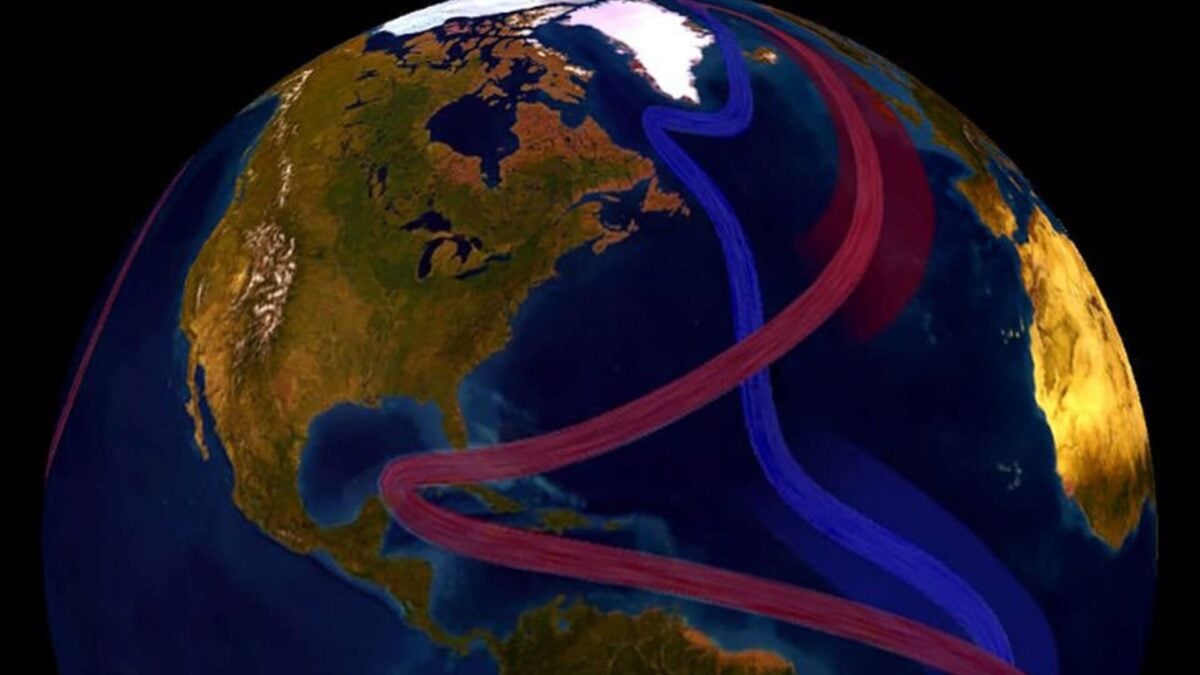
“In a study that has yet to undergo peer review…” tells you all you need to be concerned about for right now. AMOC is a very complex phenomenon and not easy at all to model. All conclusions should be properly vetted before becoming actual news.
You can also go find the article and read it and judge it for yourself.
Thing about it is, something will happen. Complexity aside. If it changes, the likelihood of a bad outcome is significant.
Any dramatic change in nature is almost always bad change, chaos is extremely bad for many parts of civilization.
There have been dozens of studies indicating issues with AMOC, but because the latest one has yet to be peer reviewed we should do nothing and ignore all the warning signs
IDK, maybe just this once we act early. What’s the worst that happens, we reduce pollution a bit? We invest too much into scientific research?
I get that it’s easy to to jump to conclusions online but you literally have me all wrong. I work in researching carbon sequestration. As already mentioned in a different comment reply, I’m happy that people are researching AMOC and the consequences its weakening will bring. But, there’s a very big difference between saying, “AMOC is weakening and may collapse at some point if things don’t change”, and “we’re already past the point of no return”. One is a helpful statement, the other just drums of despair, which isn’t a helpful emotion for tackling climate change.
If you look at the pre-print, its written to my eyes in a somewhat unscientific manner relative to most other climate publications, and so I kind of doubt its rigor. If you want an in-depth review, https://www.annualreviews.org/content/journals/10.1146/annurev-marine-040324-024822 presents an update article on why exactly making this sort of conclusion is difficult.
I prefer to be concerned only after I notice the water is boiling.
Nah… this is 2026! You can just say things now! Go back to the 90’s with your scientific integrity, party pooper.
I’m sure gizmodo has it covered
The AMOC has been in a lot of trouble for years now. Ironically, it was the cleaning up of shipping cargo oil that may have put the final nail. We stopped using a fuel that emitted SO2 into the atmosphere, but that SO2 actually ended up as a sort of shielding from the full effects of the greenhouse effect happening elsewhere over the Atlantic. Without it, temperatures this year and last year absolutely soared
Oh definitely, there’s a lot of troubling outcomes and I’m glad the research is being done. I just think news reporting on unreviewed results is good for nothing other than fear mongering. And it’s not like that has been effective for other consequences of climate change. Giving people more reasons to ‘give up’ won’t help solve problems.
But it’s amazing for clickwhoring. A lot of value.
In my groundbreaking (yet to be peer reviewed) research, Ive found evidence of the Moon being 98% Gouda cheese. The remaining 2% is actually avocado toast
We need to blow up the moon so millenials can afford rent.