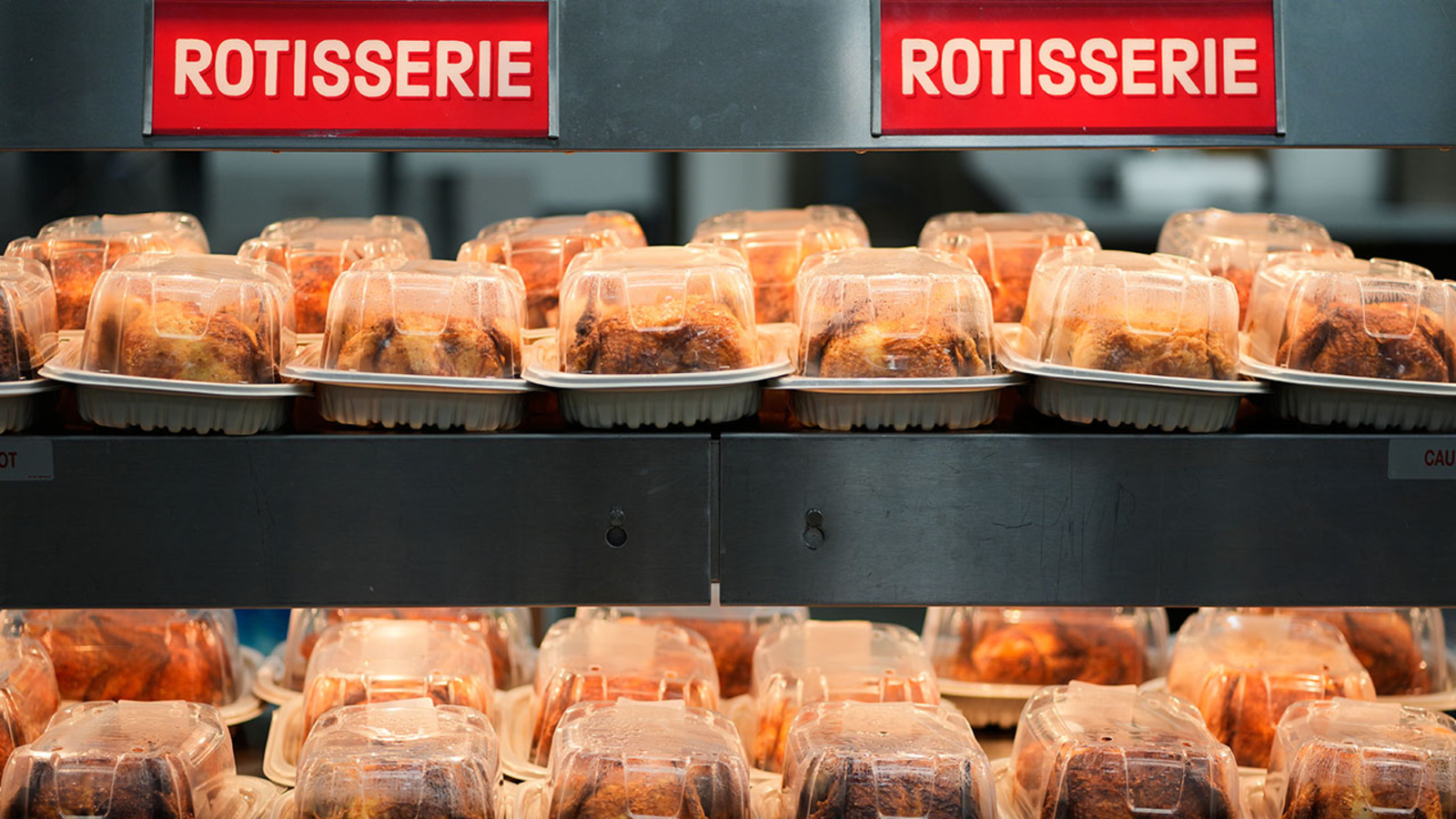
This week, senators introduced what they're calling the Hot Rotisserie Chicken Act, which would make the supermarket staple an eligible purchase under the Supplemental Nutritional Assistance Program.
It’s not just hot/ prepared foods. Had a relative who worked in a grocery store and there is like a whole list of what you’re allowed and not allowed to buy. Maybe people who know more can fill in the details, all I remember is that you had to buy 2% milk or skim; no whole milk for poor kids. ridiculous.
You’re thinking of WIC, not SNAP. It’s only for pregnant women and kids under a certain age to make sure they have the bare minimum of nutritional needs met. And yeah, it comes with a ton of rules and limits. They’ve slightly modernized it, but you used to have to use checks that had the items listed and you had to buy it all at once or miss out for the month. There’s a booklet that lists the item, with brands and sizes, that can be used. No substitutions or exceptions. And if something is miscoded, oh well.
The items are 2% milk or soy milk, peanut butter, whole wheat bread/tortillas, canned fish, low sugar cereal, fruit juice and like $10 worth of fresh fruits and veggies.
It can be life saving, but I remember the entire program being really demeaning and too difficult to utilize.
Here in CA the only restrictions are hot food and alcohol (and hot food is restricted only if you aren’t homeless), but in my birth state my sister had to only buy specific brands of certain allowed foods. It’s nuts.
And it should be noted that even that hot food rule isn’t even followed outside of grocers. The reason you can used food stamps at fast food and restaurants is because they technically sell the food to you uncooked then cook it for you for free. It’s a stupid restriction everyone knows it is but we still do the whole dance and pony show.
I see the “EBT accepted” signs/flags at a lot of fast food places here but I had assumed it was the same as the hot food rule for grocery stores! ie, homeless only. So dumb, but I’ve had people here on the fediverse insist to me that the poors should get the bare minimum subsistence through food stamps and nothing else.
Honestly the whole no hot food thing just comes across as Reaganite drivel to me. Historically most food charity things only gave out hot or cooked food since it was easier and cheaper to just do a bulk of pasta, donuts, or bread since then you could make it with demand and not have to break it up according to how many people may or may not come in. Sure there’s some worry about cost but just give the businesses a tax incentive or something to have lower EBT prices.
IDK this whole thing about hot vs cold food just comes across as arbitrary and stupid. I get alcohol and maybe food over a certain price depending on different factors but as a whole the restrictions seem stupid.
I realize that. An ex neighbor had 6 kids and no ride to the grocer, so I obviously helped when I could. Peanut butter, 2% milk, eggs, other stuff I forget by now.
Also causes a lot of confusion for more niche products. For example, my local store has glass bottles of milk where you can return the bottles to get some money back, but EBT doesn’t cover the cost of the bottle, even though the milk itself is cheaper than the other milk options when you factor in the value from returning the bottle.
Everyone on EBT either needs extra cash to pay the bottle deposit, or they spend more money on milk.
Legally speaking, that store could get in big trouble. That’s why my local store doesn’t do it. That’d be equivalent to them letting you exchange your SNAP benefits for cash, since the bottle could be redeemed for money/credit.
Idk if it may be different in other states, but in California all taxes, including recycling CRV, are waived when using SNAP. It wouldn’t make sense for food money paid by taxes to just go back into the pool of taxes. The only returnable bottles I have seen are over at the grocery store across the street from me, and they require coming back to that same store with a receipt, so I don’t think I could redeem them for free cash.
It doesn’t really matter how much they’re worth, it’s considered an exchange of SNAP benefits for goods or cash not covered by the program. In my area they’re a few bucks, which isn’t nothing, but even if they were worth less, the store could permanently lose its ability to take SNAP payments if they were found selling the returnable bottles for SNAP credit.
That’s not SNAP–SNAP let’s you buy whatever food you want, as long as it’s not hot/prepared.
You’re thinking of of WIC (Women, Infant, Children), which provides food for mothers with young children. These are restricted for a couple of reasons, such as the foods being aimed at infant and child health and, iirc, the approved foods being less expensive and thus having the program’s funds go further.


It’s not just hot/ prepared foods. Had a relative who worked in a grocery store and there is like a whole list of what you’re allowed and not allowed to buy. Maybe people who know more can fill in the details, all I remember is that you had to buy 2% milk or skim; no whole milk for poor kids. ridiculous.
You’re thinking of WIC, not SNAP. It’s only for pregnant women and kids under a certain age to make sure they have the bare minimum of nutritional needs met. And yeah, it comes with a ton of rules and limits. They’ve slightly modernized it, but you used to have to use checks that had the items listed and you had to buy it all at once or miss out for the month. There’s a booklet that lists the item, with brands and sizes, that can be used. No substitutions or exceptions. And if something is miscoded, oh well. The items are 2% milk or soy milk, peanut butter, whole wheat bread/tortillas, canned fish, low sugar cereal, fruit juice and like $10 worth of fresh fruits and veggies. It can be life saving, but I remember the entire program being really demeaning and too difficult to utilize.
It kinda sounds like someone took the old food stamps system and just combined the entire fucken booklet into one cheque. Why?
It varies state by state.
Here in CA the only restrictions are hot food and alcohol (and hot food is restricted only if you aren’t homeless), but in my birth state my sister had to only buy specific brands of certain allowed foods. It’s nuts.
And it should be noted that even that hot food rule isn’t even followed outside of grocers. The reason you can used food stamps at fast food and restaurants is because they technically sell the food to you uncooked then cook it for you for free. It’s a stupid restriction everyone knows it is but we still do the whole dance and pony show.
I see the “EBT accepted” signs/flags at a lot of fast food places here but I had assumed it was the same as the hot food rule for grocery stores! ie, homeless only. So dumb, but I’ve had people here on the fediverse insist to me that the poors should get the bare minimum subsistence through food stamps and nothing else.
Honestly the whole no hot food thing just comes across as Reaganite drivel to me. Historically most food charity things only gave out hot or cooked food since it was easier and cheaper to just do a bulk of pasta, donuts, or bread since then you could make it with demand and not have to break it up according to how many people may or may not come in. Sure there’s some worry about cost but just give the businesses a tax incentive or something to have lower EBT prices.
IDK this whole thing about hot vs cold food just comes across as arbitrary and stupid. I get alcohol and maybe food over a certain price depending on different factors but as a whole the restrictions seem stupid.
It really sounds like WIC?
WIC is specifically for women and children. It is federally funded, but it is administered by the states.
I realize that. An ex neighbor had 6 kids and no ride to the grocer, so I obviously helped when I could. Peanut butter, 2% milk, eggs, other stuff I forget by now.
Car Centric urban planning is bad because poor people simply do not have a transportation options. The system literally does not work correctly
Community is so important, thank you for being a good neighbor :)
Aw, that’s sweet. I can assure you when I had no ride, if a neighbor hadn’t helped me, I would have been in dire straights, for sure!
Also causes a lot of confusion for more niche products. For example, my local store has glass bottles of milk where you can return the bottles to get some money back, but EBT doesn’t cover the cost of the bottle, even though the milk itself is cheaper than the other milk options when you factor in the value from returning the bottle.
Everyone on EBT either needs extra cash to pay the bottle deposit, or they spend more money on milk.
I’ve been on SNAP and have never had to pay for the bottles.
For returnable ones?
Legally speaking, that store could get in big trouble. That’s why my local store doesn’t do it. That’d be equivalent to them letting you exchange your SNAP benefits for cash, since the bottle could be redeemed for money/credit.
Idk if it may be different in other states, but in California all taxes, including recycling CRV, are waived when using SNAP. It wouldn’t make sense for food money paid by taxes to just go back into the pool of taxes. The only returnable bottles I have seen are over at the grocery store across the street from me, and they require coming back to that same store with a receipt, so I don’t think I could redeem them for free cash.
Yes, for returnable ones. And no, it wouldn’t. Do you know how much those bottles are worth? Almost nothing.
It doesn’t really matter how much they’re worth, it’s considered an exchange of SNAP benefits for goods or cash not covered by the program. In my area they’re a few bucks, which isn’t nothing, but even if they were worth less, the store could permanently lose its ability to take SNAP payments if they were found selling the returnable bottles for SNAP credit.
That’s not SNAP–SNAP let’s you buy whatever food you want, as long as it’s not hot/prepared.
You’re thinking of of WIC (Women, Infant, Children), which provides food for mothers with young children. These are restricted for a couple of reasons, such as the foods being aimed at infant and child health and, iirc, the approved foods being less expensive and thus having the program’s funds go further.