

breakfastmtn
He/Him
Sneaking all around the fediverse.
Also at:
[email protected]
[email protected]
[email protected]
- 57 Posts
- 31 Comments



 2·1 day ago
Well, I think we both effectively said our bits. Fun disagreeing with you. Cheers 🍻
Why are people so bizarrely defensive about this?
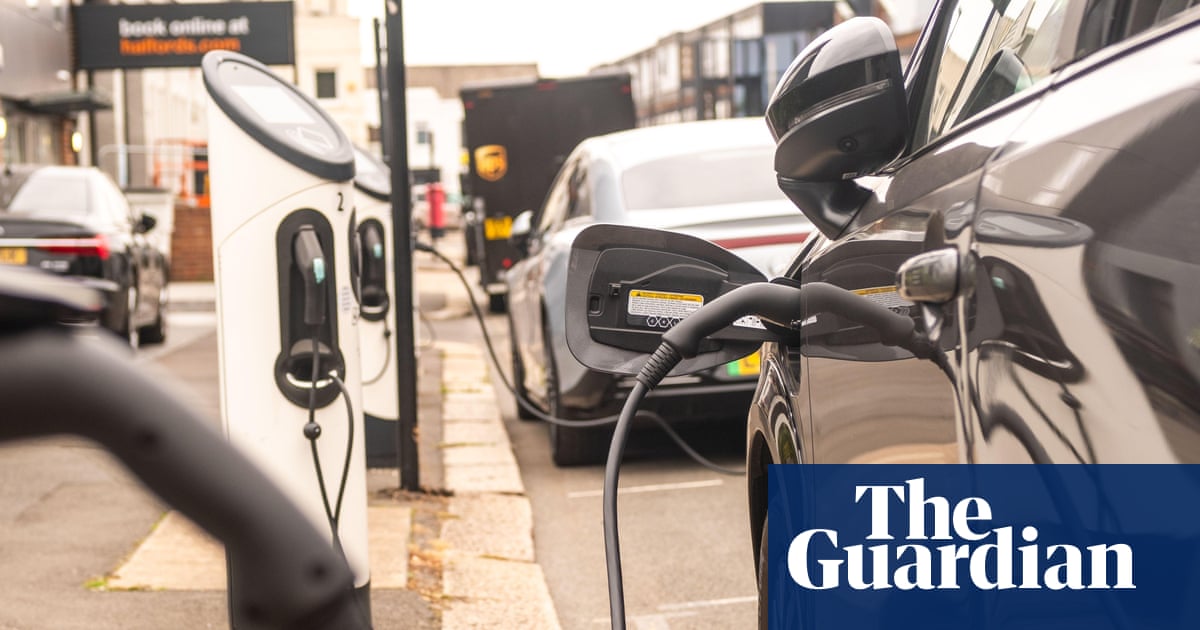
This isn’t sensationalism. It’s a scientific study of actual real-world fuel use based on data from thousands of vehicles (at least ten thousand, I assume, based on earlier studies). If, as the study author says, internal combustion engines are being used more frequently than estimated, should it not be addressed? Should we not be aiming for higher efficiency in these vehicles? If tests aren’t accurately predicting usage, should we not develop more accurate tests?
If Apple were dismissing half their users as outliers, I still think people would be pretty pissed…
For the average PHEV driver, they probably get close to the mfg estimate when driven as expected but the generalized data encompasses non standard users.
Based on what though? Is this just an assumption?
I’d like to see the population in the sample for this study.
Unfortunately (and annoyingly), the Guardian doesn’t link to the study. I took a quick look and found a similar study from 2022 (PDF) but nothing recent. Their conclusions are similar and they do differentiate between private and fleet vehicles.
It isn’t. They’re journalists, not propagandists. Holding their government accountable and reporting on what’s happening – good or bad – is just the job.
I guess it’s just that 300% on average seems like a lot, y’know? Like, if the average iPhone user was getting just 8 hours of an advertised 24, people would be pretty pissed. They’d probably ask for testing that better reflects real-world usage ;)
But isn’t that like Apple saying “you’re holding it wrong”?
I don’t think it’s being portrayed as a manufacturer conspiracy. When Porsche says their tests are “based on the legally prescribed EU measurement procedures,” I’m sure they’re not lying. But these data say pretty clearly that those tests don’t predict observed reality. If they don’t, what good are they really? Shouldn’t we use testing that better reflect observed fuel usage?
How is it misleading?
Manufacturers make claims about fuel consumption. Based on studying real-world data, fuel consumption is significantly worse than claimed. The study authors say that internal combustion engines are active much more frequently than claimed. They propose that manufacturers and regulators use real-world data because it’s more accurate. Is that such a bad idea?




Is there something specific about CSM?

It wasn’t just women. I think that we kind of forget that Epstein was also an accomplished, life-long conman.


It’d be nice if they could be together, work together, trust together but since the US is now run by a narcissistic mobster wannabe with dementia, it’s a bit of a big ask for Europe, or anyone for that matter, to trust the US. Hell, after what the US pulled, nobody should ever trust the US ever again in its current shape and form
That’s literally what the article is about.
As usual, I was quoting Shaboozey
 2·11 days ago
I’m not entirely convinced that you know what words mean, but…
This is part of the comment I replied to:
We shall ignore your weak and insincere apology [edit: <— see? Do you see it?]
To which I said that he’s not capable of making an apology so holding him to that standard is weird. Really, it’s weird and ableist. People should stop doing it.
Unless she was telling someone about her true, passionate love for the policies of Trump, I don’t get why you’re replying to me.
I think that support may be more opportunistic than heartfelt…
Why are you misrepresenting what I wrote?
Just as a practical matter, demanding any kind of apology or explanation from a guy who physically cannot communicate seems like a big ask. In this case ‘quality of apology’ is a foolish metric. It would be nice if Chomsky could explain himself, but he can’t.
Chomsky is 97 years old and had a massive stroke several years ago. He’s not capable of speaking or writing.
 8·13 days ago
Well shit, that was a absolute banger of an article. Thanks for posting it!
The issue isn’t really that the estimate is wrong, it’s that it’s wrong by an enormous amount – and one that’s been increasing every year. I don’t think that the study is trying to say that these vehicles are inefficient as some kind of absolute judgment, but that they’re less efficient than estimated (although there are big differences based on vehicle make and model).
I don’t think the problem really lies with manufacturers, it’s that the current tests aren’t accurate enough to predict real-world usage closely enough. Although, driver input is mediated by computer systems and if on-board systems are being too aggressive in switching over to ICE, I suppose that’s a manufacturers problem.
Really, they’ve been doing these very large studies for a long time. The sample size is large enough to capture the full diversity of driving styles and it cannot be a few outliers skewing results. Since 2012, the disparity between estimated and observed fuel usage has grown every year. Why? Why is it changing and why is it always changing in the same direction?