

5·
14 days agoI’m sorry to tell you the sets have already been dismantled and set pieces already sold off. It’s one thing to renew a show that still had its physical pieces, another thing to have to rebuild everything again.
I’m sorry to tell you the sets have already been dismantled and set pieces already sold off. It’s one thing to renew a show that still had its physical pieces, another thing to have to rebuild everything again.
Not medical advice, but a suggestion of easy things to ask your doctor to check for if you have insomnia, and inexpensive to address if they are the culprit: taking taking B12 and D supplements gave me (back?) my ability to sleep. I’ve never slept better in my life.

Boox has 10.3" and 13.3" models: https://shop.boox.com/collections/all-products/13-3 The 13.3 would be closest to A4 (assuming that’s what you meant, A4 or 8.5x11). They run Android, you can install other reader apps like Kindle, Kobo, Libby. You can load PDFs by USB (which I do). There was a browser interface which I’d tried and it worked, but I just don’t use it. No idea if it’s still available. The built-in reading app can mark up epubs the same as PDFs. I purchased a Wacom stylus that has a side button for the eraser function because the original it comes with has the eraser on the top. I didn’t like having to flip the stylus over.
I have a predecessor 13.3" model, the Max Lumi, which is no longer available, but I am still fairly pleased with it. I’d gotten mine for the purpose of splitscreening a document on one side and notebook on the other side, to take notes for school. If I were to buy again now, I would go for the slightly smaller 10.3 size to be more portable, but unlikely to use spiltscreen. I would also opt for colour (which was not yet an option when I bought mine.)
A tenet of Taoism is that nothing is constant and everything changes. We can have peace and be clear-minded by moving with, around, even redirecting the changes, rather than directly resisting them.
I’m not a taoist, but I think that’s pretty damn wise.
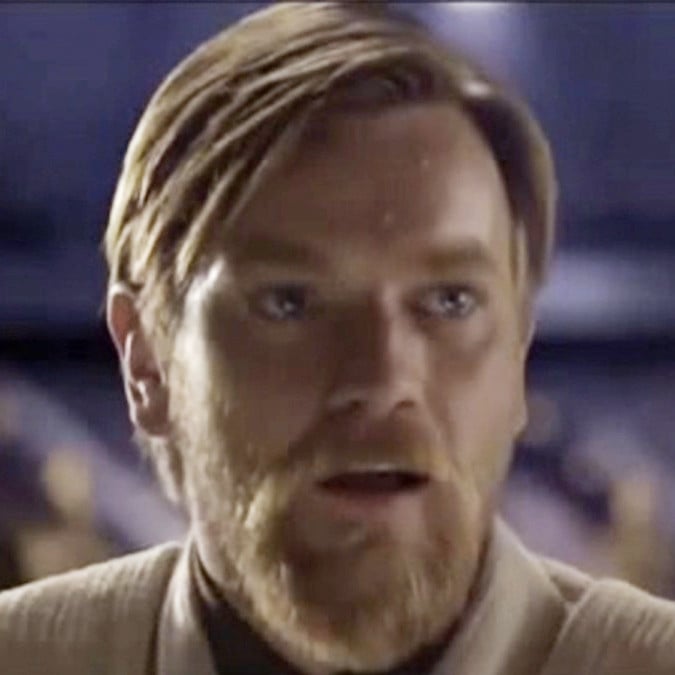
Are you familiar with the reputation of sabreurs being the crazy people among fencers? 😂
The problem is they called them light sabres, so, naturally, they must be wielded maniacally.

No, the choices to upload your own thumbnail or to select from a random three frames are still there. I was just curious to find out what “Suggest a thumbnail” was, since I figured the random ones were already essentially a “suggest a thumbnail”. So I totality, the options are you can upload your own, three random frames, three gen-AI images.

Telling a conservative they’re incorrect is oppression to them.
The other day I uploaded a video of a recorded meeting, and I wondered what “suggest a thumbnail” did, so I clicked it. It’s three AI-generated images based on the video. That’s when I realized that all those YouTube thumbnails that look the same are made from that function.

A generation ago, Iran was not like this. Islam itself does not require any of this. An important part if Islam is that the Qur’an cannot be translated, so it is in a form of Arabic few people can really understand. People must depend on the mullahs to tell them what it says. (Which was once also what Christians said about the Latin Bible, though that makes even less sense than the Qur’an because the Bible was translated into Latin.) This is anti-women conservatives using the guise of religion to push their hatred on women and control the population as a whole. As you say, Christianity was once used in the same way, but it still is now, isn’t it?
In the US, abortion is a bogeyman used to threaten women from getting healthcare (even to the point of death), and monitor and control their movements. It’s being done under the guide of “Christianity”. “Christianity” is used against people of different races (because they can’t really be Christian if they’re not white), actually other religions, sexuality, and gender. Yet, how much did Christ ever talk about these things?

I make the argument that Star Wars is not science fiction, rather a fantasy that takes place in space. Science and technology do not drive the stories, nor are they the solutions to the problems that arise. They are incidental and could just as well be replaced with actual magic. They tried to go the other way by explaining the force with midiclorians… Which was accepted by basically no one.
Modern trucks are just emotional support vehicles for the egoistically challenged.
And who or what exactly is going to stop him?
When no one (who is in a position to enforce) cares what is legal or constitutional, he can do anything he wants. Just look at the current state of the US and tell me anyone in any power or authority cares. Do you really think “third term” is where they’ll draw the line? I’d put every dollar I have that is not actually about not carrying, but that this is the desired outcome, to enrich themselves.
I only see one way to stop him, and it’s certainly not by law or votes.
Truly, I am shocked he is alive and looks as well as he does.
Well, to my understanding, Hegseth wants extra-Teed up dudes, yes? And she is not an extra-Teed up dude. This is actually gender-affirming.
Bet they’d take a trans dude who’s already on T and give him even more.
Is its financially feasible (or maybe barter with something else), to have a sitter just to give yourselves an evening or weekend afternoon off? Just a few hours where you’re not working and not being parents. Have a park or coffee date together.
We have reached the point where I genuinely cannot tell reality from satire.
“Is this real? Am I eating the onion?”
I don’t even know anymore.
I wanted to change careers to something totally different and took a course and found the maths beyond my capability to understand. That was when I found my ceiling. And you know what? That’s okay. I tried, and now I know I can’t do it. I won’t live the rest of my life wondering “what if” or regretting that I didn’t go for it. Instead, I changed directions and I’m about to (hopefully) graduate from a different masters.
In a similar vein, during my undergrad, I took one single class in 3D animation. Up until that point, I thought I would love it. Turns out I HATED it. I could do it, but I hated it. I’m glad I took that class, otherwise (again), I may have spend the rest of my life thinking about this ideal career and regretting not going for it. Instead, I’m so relieved that I never had to do it again.

I didn’t know who Jenny McCarthy was when I started watching The Masked Singer. I don’t keep up with a lot of pop culture, so I thought she was probably an actress who’d just been on shows hadn’t seen before. (I didn’t know Robin Thicke or Nicole Scherzinger were either, at first. And I often don’t know who the celebrity contestants are, too.) Then one time a contestant thanked her for her work… and so I wondered and searched online.
Ken Jeong is a comedian, but he was a medical doctor first and he continues to work enough as an MD to keep his credentials. How can stand to sit at the same table as her? Especially when it was COVID and people were literally dying by the millions. (That’s when I first saw the show.) I suppose the money is good enough for him to put aside his medical credentials and Hippocratic oath aside when he’s not actually practising.


You’re right that interactions are not hugs, but they create friendships with people with whom it is both socially acceptable and emotionally healthy to hug. If you don’t hug your friends, you’re missing out in life.