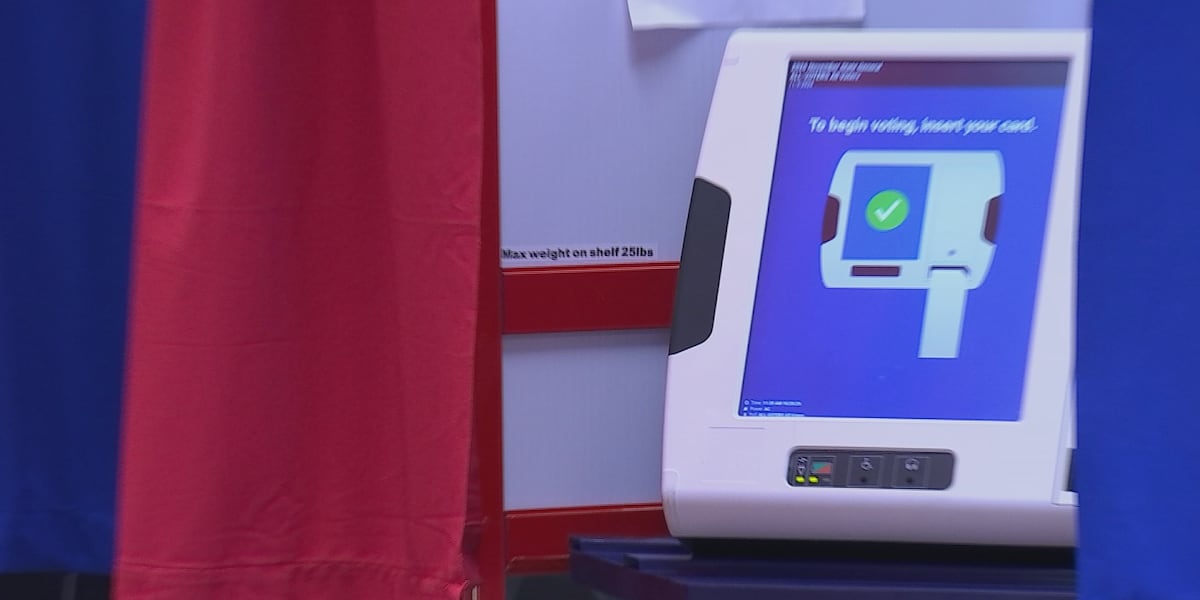
Some Tennessee voters say they touched one candidate’s name on a voting machine but saw a different name selected. State election officials say unintended touches can cause that to happen.
The “News Reporter Voice” is actually an Ohio accent. Or rather, the distinct lack of an accent. Add in proper enunciation while projecting calm authority, and BAM! that Ohio non-accent turns into the News Reporter Voice.
There’s no such thing as a lack of an accent. All that means is “it’s the same accent as me”. To a Brit, someone from Ohio has an extremely thick American accent, what with all the rhotic Rs and such.
well, I mean, it’s a lack of any specific American accent. They don’t sound like they’re from the Appalachia, West/East coast, or Boston, or the south etc. etc. A lot of American television news reporters came from Columbus, Ohio back-in-the-day because we just don’t have a regional dialect.
What I said still applies in the context of American accents. There’s nothing that makes Ohio’s accent the base from which others deviate. It’s literally just the one you happen to be the most used to hearing. To someone who grew up in rural West Virginia, your accent is quite noticeable, and their neighbors just talk normally. To them, everyone but them has an accent. Yours isn’t special in any way.
They don’t sound like they’re from the Appalachia, West/East coast, or Boston, or the south etc. etc.
No, I mean, the “radio announcer” and thus the “news reporter” voice was modeled after the Ohio accent, because it was seen as a non-accent. You’re right that we have one, it’s just so incredibly bland, that it comes across as not one at all.
Vizetelly, who established a school for announcers at CBS, was concerned with maintaining the “purity” of American English. In his mind, the Midwest was the place to be—and Ohio in particular.
Vizetelly and other educators felt that broadcasters could evoke trustworthiness and objectivity by imitating the speech of the “heartland.” Eventually, when radio announcers and TV journalists began sounding like they were from the Midwest, the “broadcaster’s dialect” became understood as normal.
Ah. I’ll grant that because it’s an accent that guy liked, it became a prevalent accent in news and popular media.
I’d still push back on it being bland, since that’s still just familiarity. Someone who grew up in rural Appalachia without electricity hearing it for the first time would find it quite thick and probably make fun of it and find ways to exaggerate it.


The “News Reporter Voice” is actually an Ohio accent. Or rather, the distinct lack of an accent. Add in proper enunciation while projecting calm authority, and BAM! that Ohio non-accent turns into the News Reporter Voice.
There’s no such thing as a lack of an accent. All that means is “it’s the same accent as me”. To a Brit, someone from Ohio has an extremely thick American accent, what with all the rhotic Rs and such.
well, I mean, it’s a lack of any specific American accent. They don’t sound like they’re from the Appalachia, West/East coast, or Boston, or the south etc. etc. A lot of American television news reporters came from Columbus, Ohio back-in-the-day because we just don’t have a regional dialect.
What I said still applies in the context of American accents. There’s nothing that makes Ohio’s accent the base from which others deviate. It’s literally just the one you happen to be the most used to hearing. To someone who grew up in rural West Virginia, your accent is quite noticeable, and their neighbors just talk normally. To them, everyone but them has an accent. Yours isn’t special in any way.
No, they sound like they’re from Ohio.
No, I mean, the “radio announcer” and thus the “news reporter” voice was modeled after the Ohio accent, because it was seen as a non-accent. You’re right that we have one, it’s just so incredibly bland, that it comes across as not one at all.
Here’s an article that goes into further detail
Ah. I’ll grant that because it’s an accent that guy liked, it became a prevalent accent in news and popular media.
I’d still push back on it being bland, since that’s still just familiarity. Someone who grew up in rural Appalachia without electricity hearing it for the first time would find it quite thick and probably make fun of it and find ways to exaggerate it.