Originally the F-150 was a perfect vehicle for most of non-urban America. It was very inexpensive (not a joke), simple to fix (also not a joke), dependable (I swear I’m not trolling), and very utilitarian. Eventually it became an icon and the default purchase for many, even though the more popular models have lost all of the features that made it attractive to begin with.
I don’t think the article specifically addresses it, but I’d guess that their numbers account for fleet purchases, which are always going to skew the numbers a bit
There are many lists of “most popular vehicles” out there. The F-150 tops some of those lists and doesn’t even appear on others. There are a lot of games one can play with specificity to make something more prominent (“Ford F-series”) or less prominent (“Ram 1500 Rumble Bee”) in a list like that.
But the point – that we have more pickup trucks than can reasonably be justified – stands.
Everyone asking why and making jokes about masculinity are missing this point entirely. Ford is the most popular truck when it comes to fleets and actual work trucks, the kind you see with a flat bed or tons of built in metal tool boxes.
Good point, I missed that in the title. The fleet side of things still stands as far as I know. Though, the linked article linked doesn’t really mention any statistics on car sales.
US auto makers failed at making 4 cylinder engines compared to Japan. So they consolidated around the v8 which they did really well. Everything else is a result of marketing and affordability over the years.
I don’t agree they failed - there are plenty 4 cylinder and hybrid cars available.
The thing is- people want trucks, and either they can afford them, or dealers and banks gaslight them to believe they can afford them. So that’s what people buy.
I always find it funny when people explain the American auto market’s characteristics by shitting on how stupid American auto industry can’t even make cars. That is irrelevant, a bunch of people drive japanese or european cars if that’s what they want, it’s not like there aren’t imports available. People buy big ass trucks (including Toyota btw) because that’s what they want to drive. It’s that simple.
Manufacturers make what people want, for the most part.
Not quite. There has been a systemic push to grow the size of US vehicles. Why can you not find ANY small trucks? It’s NOT because every American that wants a truck wants a big one.
This isn’t a conspiracy in the loonie sense. It’s completely true, though it was a conspiracy to manipulate the market, which succeeded. It started with the Chicken Tax.
Poorly executed vehicle efficiency requirements based on vehicle footprint ended up as a pressure for larger vehicles as well, which led to the rise in SUVs and oversized puckups.
I think you misunderstood what a light truck is . All pickups are in this category.
A tariff on imports is hardly forcing American manufacturers and consumers to prefer bigger trucks and cars. They could just make them smaller if the smaller versions sold better.
The purpose of the tariff is:
to give US domestic automakers an advantage over imported competitors
Look further into it. It’s extremely true that it was deliberate market manipulation. It started with the Chicken Tax. That was far, far from the only contributing factor.
I don’t understand how you think marketing explains consumer choice for trucks over cars. There’s no central advertising committee that bans the advertising of cars. There are in fact ads for cars and suvs as well. There is no concentrated marketing campaign against cars.
This is stricktly anecdotal but in my market it is clearly visible how car advertisement is heavily shifted towards SUVs. On television, magazines, etc. There is more publicity put towards SUVs.
There isn’t a central committee for advertising but it is easy to manufacture desire subtly. If a brand is well know for small hatchbacks but is aware the SUV segment is more popular or returns more profit, the advertisement can be engineered towards that particular segment in detriment of another.
There is something I gladly grant to americans and is that they know how to sell anything. If european brands started to create desire for SUVs even by moving away from their signature vehicles, americans can do it as well, if not better.
GM bought, built and jointly developed four cilinder engines in Europe for decades. They could just as simply brought home the technology and implement it.
From a long conversation I had with a few people that lived in the US for some decades, it’s about the perception of size and power. It’s about showing. There is a Camry where I live, gas engine; the car is a land yacht, the engine must be huge. For what? Next to the same car, a BMW is parked every day, smaller engine, much more power, a completely different level of manufacture.


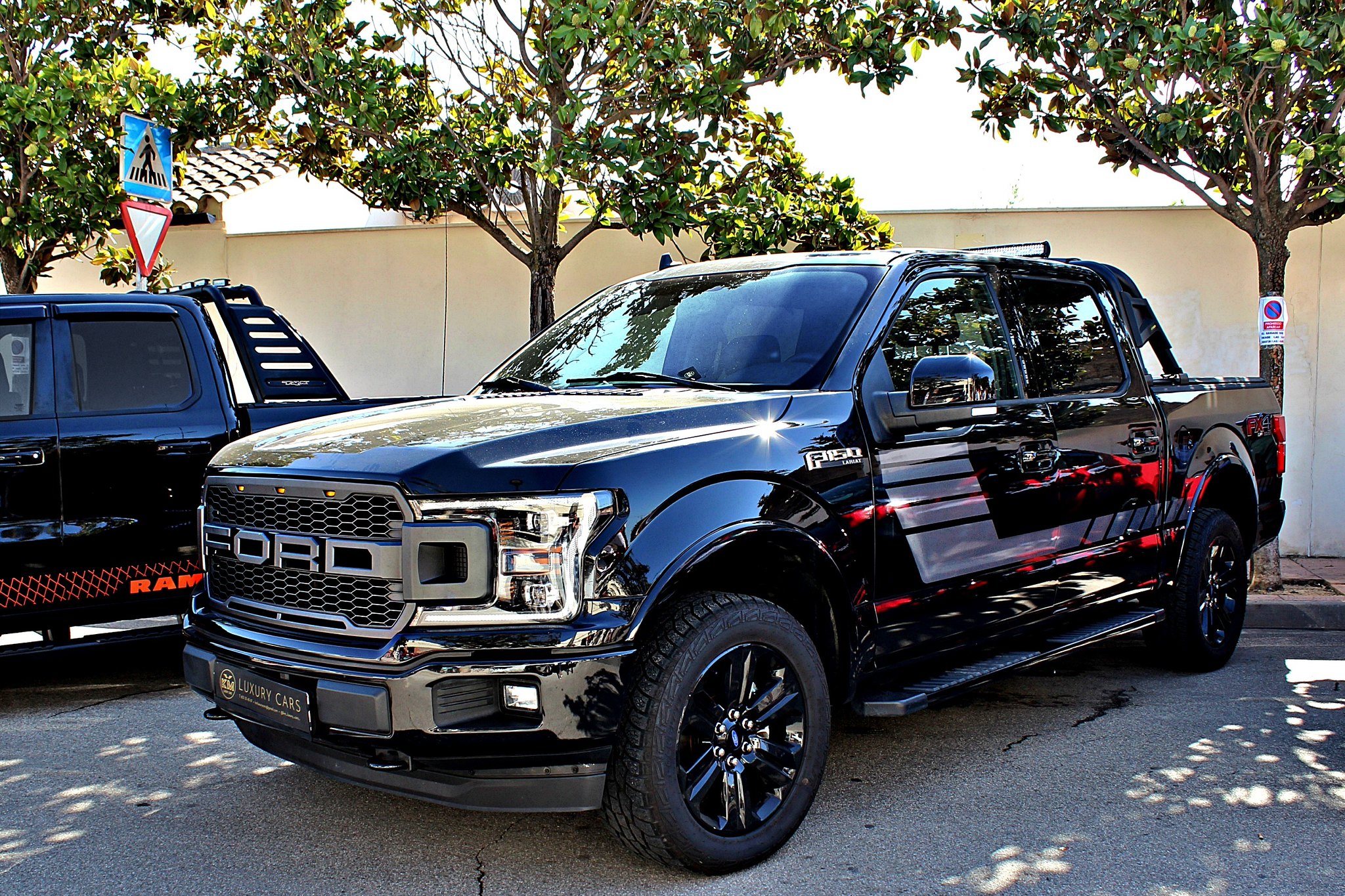
And the following question is “Why?”.
Standard issue in the toxic masculinity starter pack.
Originally the F-150 was a perfect vehicle for most of non-urban America. It was very inexpensive (not a joke), simple to fix (also not a joke), dependable (I swear I’m not trolling), and very utilitarian. Eventually it became an icon and the default purchase for many, even though the more popular models have lost all of the features that made it attractive to begin with.
It also used to be a reasonable size. Larger than sedans, bit not by nearly as much.
Oh yeah, and not five foot tall at the hood by default.
I saw an OG F-100 truck the other day. The roof of its cab is about the same height as the hood of these new monsters.
Small peepee
I don’t think the article specifically addresses it, but I’d guess that their numbers account for fleet purchases, which are always going to skew the numbers a bit
There are many lists of “most popular vehicles” out there. The F-150 tops some of those lists and doesn’t even appear on others. There are a lot of games one can play with specificity to make something more prominent (“Ford F-series”) or less prominent (“Ram 1500 Rumble Bee”) in a list like that.
But the point – that we have more pickup trucks than can reasonably be justified – stands.
Everyone asking why and making jokes about masculinity are missing this point entirely. Ford is the most popular truck when it comes to fleets and actual work trucks, the kind you see with a flat bed or tons of built in metal tool boxes.
Those are probably not 150s, though.
Good point, I missed that in the title. The fleet side of things still stands as far as I know. Though, the linked article linked doesn’t really mention any statistics on car sales.
My brief internet search shows it as the Ford F- Series, as of July of this year. https://www.caranddriver.com/news/g71006285/bestselling-cars-2026/
US auto makers failed at making 4 cylinder engines compared to Japan. So they consolidated around the v8 which they did really well. Everything else is a result of marketing and affordability over the years.
I don’t agree they failed - there are plenty 4 cylinder and hybrid cars available.
The thing is- people want trucks, and either they can afford them, or dealers and banks gaslight them to believe they can afford them. So that’s what people buy. I always find it funny when people explain the American auto market’s characteristics by shitting on how stupid American auto industry can’t even make cars. That is irrelevant, a bunch of people drive japanese or european cars if that’s what they want, it’s not like there aren’t imports available. People buy big ass trucks (including Toyota btw) because that’s what they want to drive. It’s that simple.
Manufacturers make what people want, for the most part.
Not quite. There has been a systemic push to grow the size of US vehicles. Why can you not find ANY small trucks? It’s NOT because every American that wants a truck wants a big one.
This isn’t a conspiracy in the loonie sense. It’s completely true, though it was a conspiracy to manipulate the market, which succeeded. It started with the Chicken Tax.
Poorly executed vehicle efficiency requirements based on vehicle footprint ended up as a pressure for larger vehicles as well, which led to the rise in SUVs and oversized puckups.
I think you misunderstood what a light truck is . All pickups are in this category. A tariff on imports is hardly forcing American manufacturers and consumers to prefer bigger trucks and cars. They could just make them smaller if the smaller versions sold better.
The purpose of the tariff is:
Look further into it. It’s extremely true that it was deliberate market manipulation. It started with the Chicken Tax. That was far, far from the only contributing factor.
Or manufacture desire, let’s not forget
I don’t understand how you think marketing explains consumer choice for trucks over cars. There’s no central advertising committee that bans the advertising of cars. There are in fact ads for cars and suvs as well. There is no concentrated marketing campaign against cars.
This is stricktly anecdotal but in my market it is clearly visible how car advertisement is heavily shifted towards SUVs. On television, magazines, etc. There is more publicity put towards SUVs.
There isn’t a central committee for advertising but it is easy to manufacture desire subtly. If a brand is well know for small hatchbacks but is aware the SUV segment is more popular or returns more profit, the advertisement can be engineered towards that particular segment in detriment of another.
Ok mr goal post mover. Is the big conspiracy to sell pickup trucks or to sell suvs? Or they haven’t decided yet?
That’s reaction to demand (my point) not manufacturing desire.
I was concise.
There is something I gladly grant to americans and is that they know how to sell anything. If european brands started to create desire for SUVs even by moving away from their signature vehicles, americans can do it as well, if not better.
Hence, my quip.
GM bought, built and jointly developed four cilinder engines in Europe for decades. They could just as simply brought home the technology and implement it.
From a long conversation I had with a few people that lived in the US for some decades, it’s about the perception of size and power. It’s about showing. There is a Camry where I live, gas engine; the car is a land yacht, the engine must be huge. For what? Next to the same car, a BMW is parked every day, smaller engine, much more power, a completely different level of manufacture.