

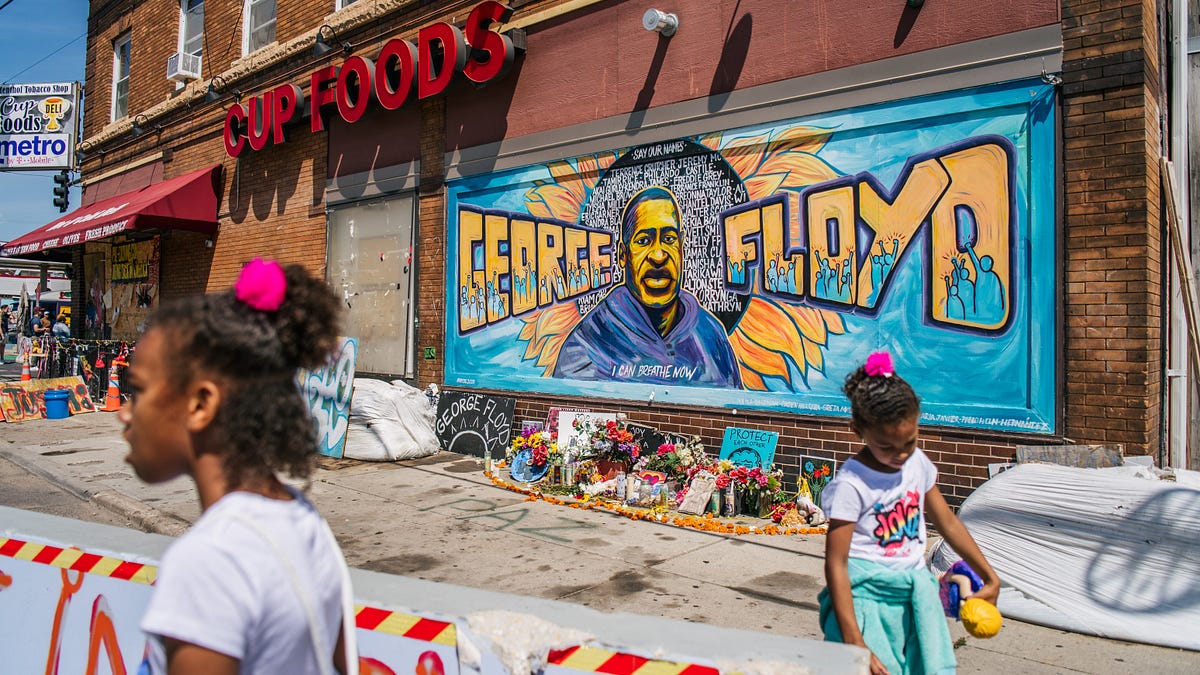
Your book, like Elizabeth Hinton’s “America on Fire,” delves into a decades-long cycle that’s played out in many US cities: Police violence, followed by uprisings, followed by promises for reform and blue ribbon commissions that ultimately produce only “modest change and a photo op.” Did you come out of your reporting with a solid idea of what a better process would look like?
Ellis: I don’t know how you can look at Minneapolis today and say they are better for choosing reform over revolution. The mayor reorganized the public safety department, then there was turnover in the leadership there. The chief who was supposed to lead the transformation of the police force recently resigned in disgrace. Like most police departments in the country, the budget continues to balloon thanks to overtime costs. And at the moment the city is failing to even meet the basics of its court-mandated reforms. By definition this is insanity, right?
I think like anything in local government, having a process for the community to guide designs and offer feedback is important. But I think the starting point has to be a total tear down, not a rebuild. That sounds simplistic, but look at where making changes on the edges has gotten us? Revised training standards and use of force policies have amounted to departments that are effectively the same. The aim needs to be so much higher.
An Anarchist revolution explicitly has no hierarchies, there is no replacement hierarchy.
The anarchist collective in Catalonia compromised over 3.5 million people, and how the people operated within it without hierarchies was well documented in Sam Dolgoff’s book from 1974, The Anarchist Collectives Workers’ Self-Management in the Spanish Revolution, 1936–1939, along with Gaston Leval’s 1975 Collectives in the Spanish revolution, if you’d like to investigate the specifics, such as how they organized transportation, universal healthcare, food production, etc.
Even the Anarchist militias had no top-down hierarchy, they instead adopted a bottom-up fighting force, where a squad of volunteers would elect their squad leader (with the ability for them to immediately recall the elected leader outside of battle if they weren’t performing to the satisfaction of the squad). All the squad leaders then elected a commander above them with the same recall ability, and so on up to the general. This is totally unlike any military structure in any centralized state military.
Without trying to offend, this statement shows a clear lack of knowledge on Anarchist political theory. It is a well fleshed out idea that has all of the traits needed for long-term stability. In fact, were Anarchism adopted on a wide scale, it would be very difficult to put that genie back in the bottle, as most people in the world (except the rich or powerful hungry elites) would vastly prefer it over any other societal system tried before.
How do you convince a person who now has access to universal basic housing, food, healthcare, and transportation (where people only need to volunteer about 3 months out of the year to keep those basic needs met for everyone), to instead go back to a system where most give up most of their waking hours to working a job for the benefit of shareholders and CEOs, where most are poor and live at the whims of the rich and powerful, and where whether you potentially live or die is at the whim of Insurance companies, landlords, your boss, etc?