

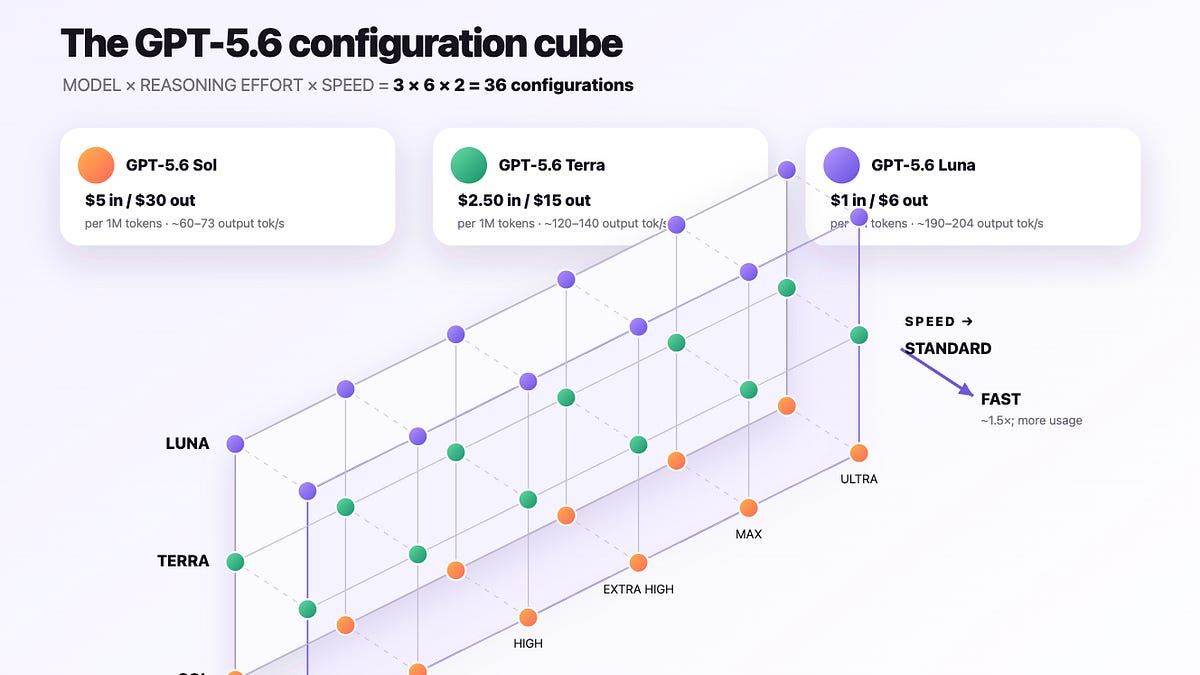
“OpenAI said GPT-5.6 is a major step forward for health intelligence, highlighting that Luna at lowest effort beats GPT-5.5 at highest effort while costing 25× less. Karan Singhal added that, in blinded physician comparisons over 20,000 axis ratings, physicians found fewer flaws in GPT-5.6 responses than physician-written responses across a hard task set.”
Silicon Valley is obsessed with changing the world, except I often think Silicon Valley’s biggest effects are mostly second-order and unintended. I suspect AI medicine will be a great example of that. Silicon Valley players dream of the chance to be multi-billion dollar revenue unicorns; meanwhile, all the real action is happening elsewhere ……
Don’t think so?
Here are two facts for you.
-
All the leading AI models are only months ahead of the open-source AI that is free to use and own. Medical AI with “fewer flaws than physician-written responses” - will be free & globally available by 2027.
-
66% of the Global South owns a smartphone. This means they can directly access AI.
Free Open-Source AI has been setting the standards, and it’s likely to do so in medical AI, too. Furthermore, it won’t just set the standards; it will be the gold standard.
If one AI outperformed the dumbest doctor on earth I’ll eat my hat
Well if you ask an AI 1000 highly specific questions it may get more correct than a doctor, even the good ones. There is a lot of medical information and no doctor knows it all, especially if it is outside of their field.
But that doesn’t mean an AI will outperform a doctor in a real-world situation, where it is important to weigh evidence, see the patient and talk to them directly. Aka a doctor needs to be able to actually think (obviously).
Guidelines are abundant, as are written studies and books, all of which the AI may have read, but they do not tell you much about the individual patient sitting in front of you.