

Required readings would include passages from Old and New Testament for students in middle school
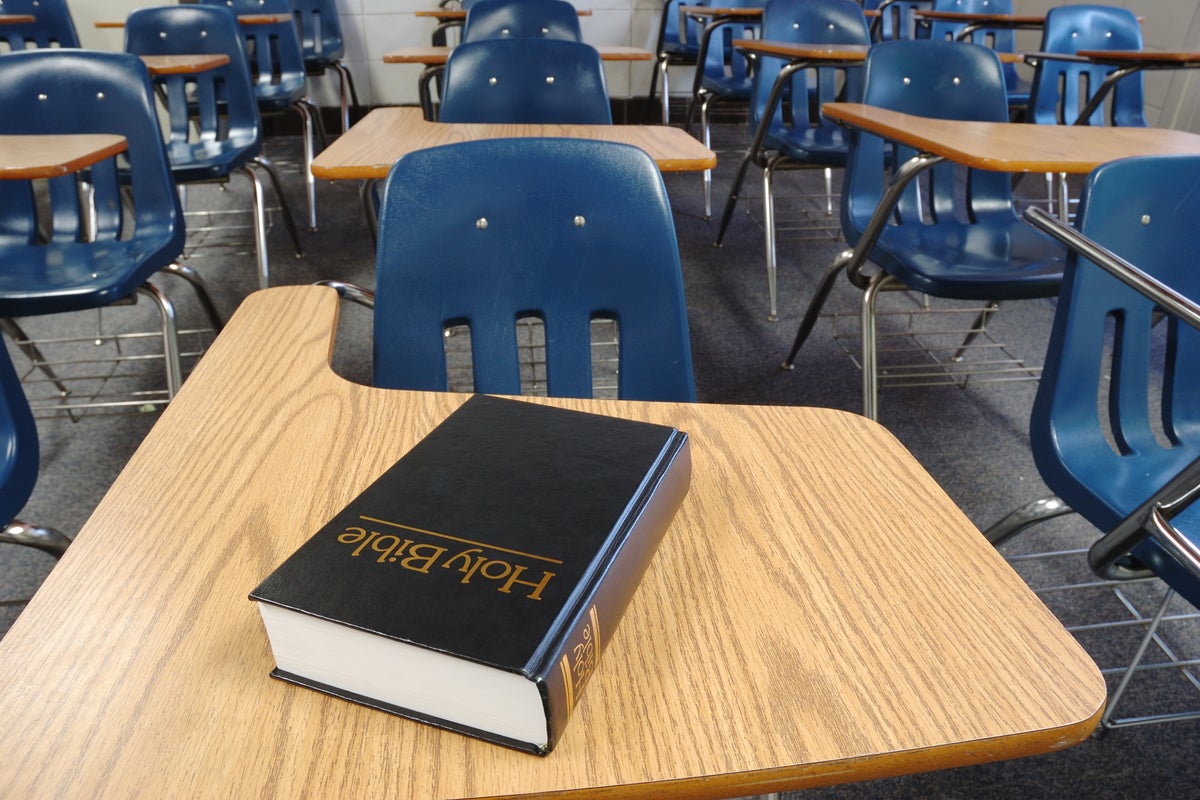
The conservative-majority Texas State Board of Education is considering adding at least 15 passages from the Bible to a required reading list as part of English lessons in public schools – the latest push from conservatives to implement Christianity into school curriculums.
Beginning in middle school, Texas students could be forced to read stories from the Bible including Jonah and the Whale, David and Goliath, and Lamentations 3 in addition to passages such as The Definition of Love from the New Testament, according to the list reported by the New York Times.
The new proposed changes have raised concerns from advocacy groups and academics who believe the changes will teach children a one-sided history lesson and “indoctrinate” students.
Quite a large number of those masses, in non-Arabic-speaking countries such as Pakistan and Indonesia, memorize the Qur’an without knowing what it means, which is a piss-poor way of preventing elite capture. More effective is that fact that, in Sunni Islam, there’s no formal religious hierarchy, and each congregation operates independently (like the Christian Congregationalists used to). Though social conformity squeezes out the diversity of beliefs, and there are respected institutions and scholars such as Al-Azhar university that are widely respected, but there’s no Sunni Pope. Sufis are structured similarly. Shia’s, on the other hand, have a hierarchy of authority that puts the Catholics to shame.
Not knowing the language is a problem which doesn’t fully eliminate the issue, you’re right, but it does eliminate the possibility of changing the written scriptures. As a result there will always be thinkers who can return to the original text and come to their own conclusions, challenging the prevailing thoughts of their region or era, something that has repeatedly occurred in Muslim history.