

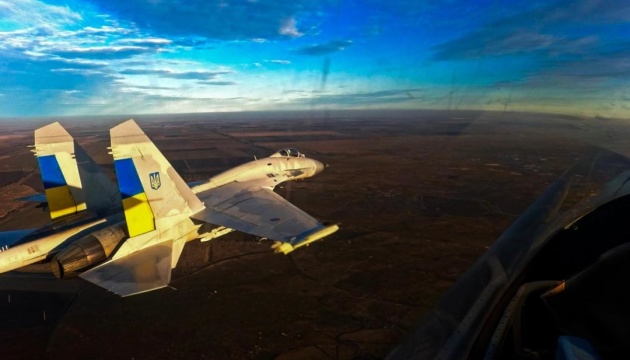
This is the beginning of the end for the high effectiveness of shaheds for their cost, which isn’t to say they will go away but helicopters and to a lesser extent affordable fixed wing aircraft are nearly ideal for hunting waves of shaheds.
So next we’ll start seeing a few Shaheds with air-to-air missiles built into them mixed with the traditional swarm of ground attack kamikazes.
Shaheeds are good because they are cheap and easier to produce than intercepting technologies.
Making it more expensive and complex to deploy would still be a win.
It would be at the cost of those planes and helicopters you send up to intercept Shaheds. That may not be a win on the net.
Yes of course they will and very very occasionally it might even work.
A couple of things to note that analysts and journalists completely ignore.
First point, if you strap the MANPADS to a shahed you are 100% going to lose that manpads whether a target is found and succesfully engaged or not. Contrast this to giving the manpads to a soldier who can carry it around until the right moment and has a much better chance of not wasting it.
Another major issue, basic physics dictates that a larger fixed wing or rotary wing aircraft will always be able to carry more powerful sensors, jammers and equipment. While a shahed definitely gains some stealth by being small, it physically cannot carry anywhere near as long distance sensors and their fidelity will be inherently limited.
To put this another way, this is like someone looking at a Bat and a Mosquito and thinking there is no way the much bigger Bat could see the Mosquito coming, but the reality is the Bat carries far more long distance and high fidelity sensors than the Mosquito does.
How is the shahed going to detect a helicopter or airplane hunting it before the helicopter or airplane detects the shahed?
One typical answer people give is “a pilot watches a camera” which ok even a super nice camera (doubt the camera is that nice) is a million times worse than a platform with a suite of radar, FLIR, night vision and other sensors.
Another typical answer people give is that well the shaheds can mesh network… but that still leaves the issue of how does the first shahed that will send the message back to the missile carrying shahed detect and locate the helicopter or airplane first?
Yes most videos released are of a helicopter or aircraft flying very close to the shahed before destroying it, but note both helicopters and airplanes can carry longer distance missiles and they always have a choice of whether to close distance with the shahed or not, so this strategy entirely relies on baiting the enemy into using a lower cost counter than they have the capability of doing.
Yes, that will work every once in a blue moon, it isn’t a hard counter, not nearly to the degree people say it is primarily because everything is dependent upon Ukrainian pilots not being careful which is just not a winning strategy.
Something to keep in mind, a dumb, hard to see shahed/lucas drone with limited sensors is most useful when flying as part of a pack with larger more capable platforms that actually can give the dumber more expendable UAV instructions so it can punch above its weight on the battlefield. To put it another way, the best way to leverage a shahed type platform is to have them surround high value manned aircraft platforms that serve as drone swarm directors.
The good news about this is it means russia does not have the functional aviation industry base left to properly take advantage of the platform they rely the most on whereas Ukraine is rapidly expanding their capacity to maximally leverage their cheap expendable flying bombs.
Quite possibly, but I saw an article earlier today (didn’t comment and can’t find it offhand) about a something like $3000 interceptor drone they’re working on, which if those get successfully deployed could go a long way towards making the shaheeds less useful.
Of course, that has nothing to do with this article, and you might well be right, sure.

