

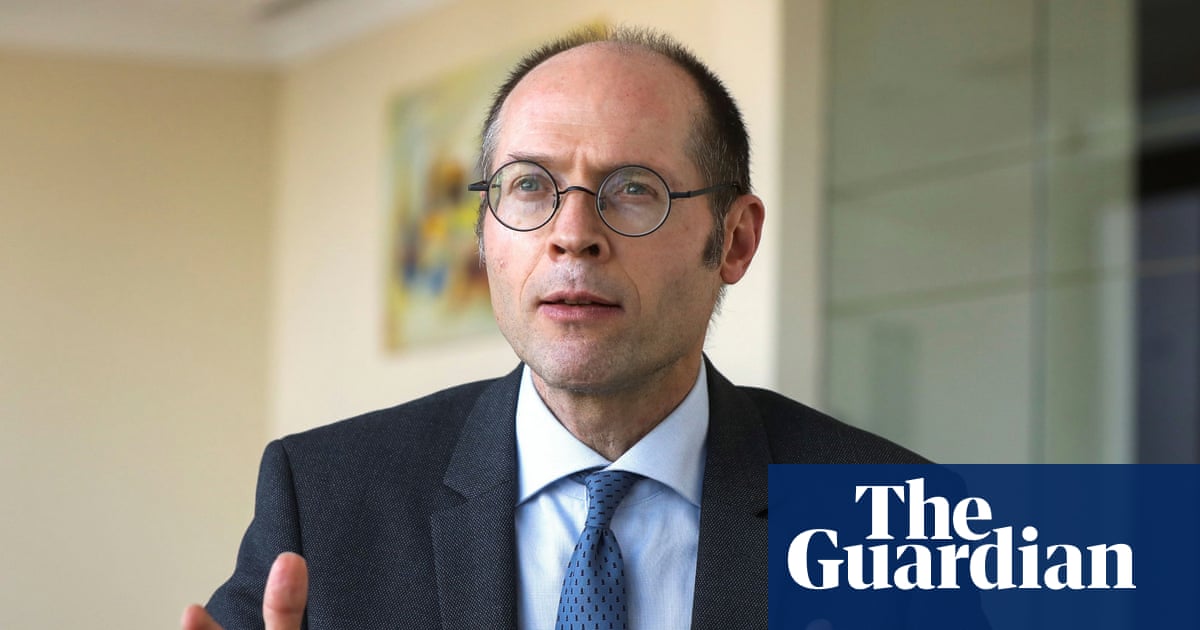
The global economy must be reordered to ensure it serves ordinary people around the world rather than the “frivolous and destructive demands of the ultra-rich”, according to a leading UN figure.
Olivier De Schutter, the UN special rapporteur on extreme poverty and human rights, says politicians must stop prioritising “socially and ecologically destructive growth” that only increases the profits – and serves the consumption demands – of the world’s richest individuals and corporations.
Instead, to tackle the interwoven crises of rising inequality, ecological collapse and resurgent far-right politics, a new economic agenda is needed.
“The scarce resources we have should be used to prioritise the basic needs of people in poverty and to create what is of societal value rather than serve the frivolous desires of the ultra-rich.”
The French used a convincing method back in the day.
Punitive measures might feel emotionally satisfying in the moment, but what they actually incentivize is hiding the corruption and exploitation better (avoiding getting caught, rather than avoiding the bad activity in the first place). Also, while an angry mob might have a taste for violence and actually perform it for a little while, it doesn’t last and it’s not a basis for a stable government or economy.
If you want long-term stability you have to organize a system so that it incentivizes the behaviors that you want, even more than it disincentivizes the behaviors that you don’t want.
I’m not sure what that looks like in this context, in a practical sense. But ultimately the problem is that everything in our society rewards the hoarding of wealth. This is not just a problem with capitalism - every communist or supposedly socialist society ever established also rewarded hoarding of wealth.
For things to be different, actually different, a different value system with a fundamentally different reward structure needs to be established, and it needs to be competitive long-term with the current system in order to exist alongside it and/or eventually replace it.
Like I said I don’t really know what that looks like in practice. The only example I can think of is the “gift economy” described in Kim Stanley Robinson’s Green Mars, in which the participants in every exchange always seek to give more than they get (essentially the reverse of normal behavior).
Sjop, sjop!