
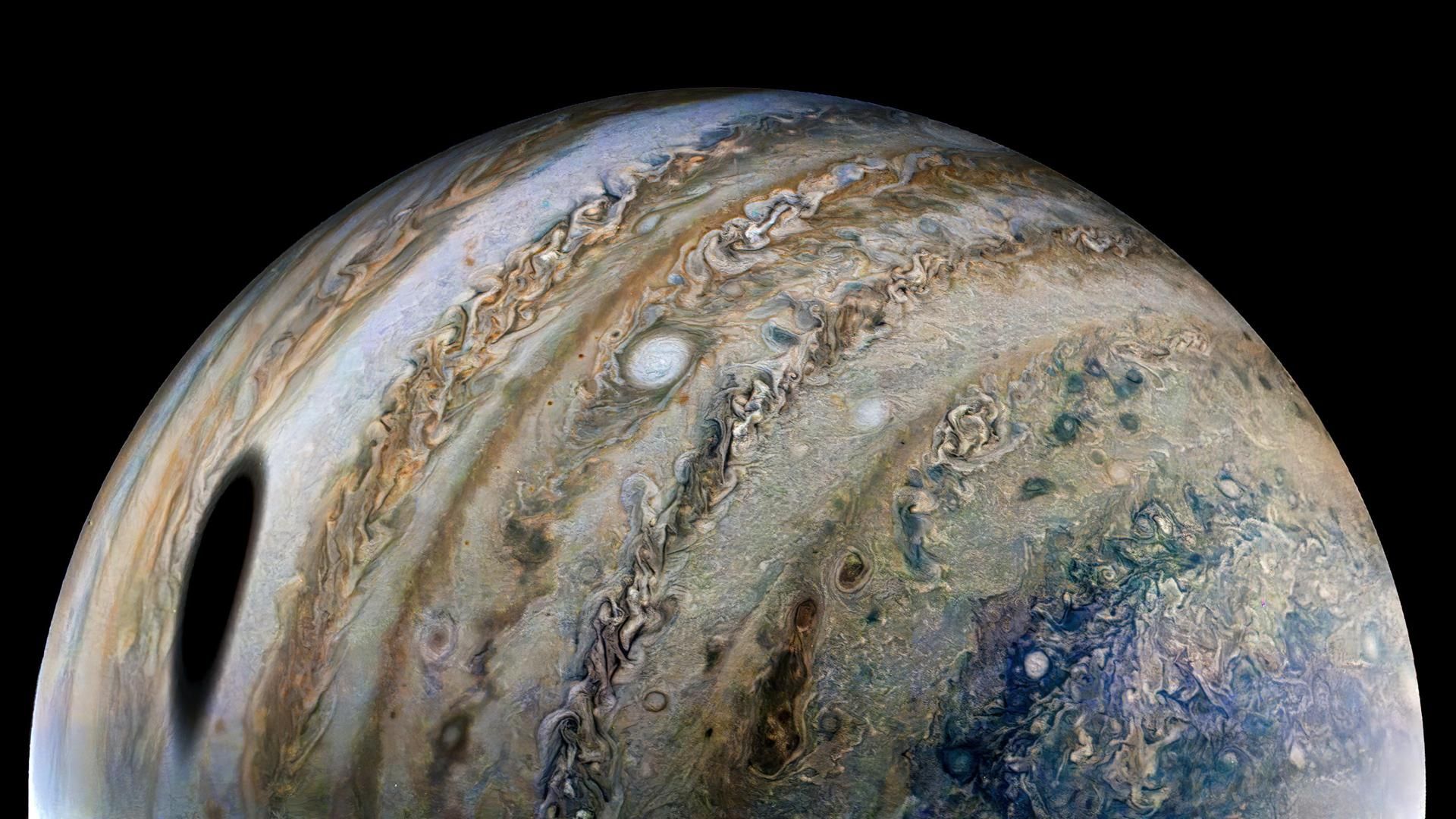
Jupiter is slightly smaller and flatter than scientists thought for decades, a new study finds.
Researchers used radio data from the Juno spacecraft to refine measurements of the solar system’s largest planet. Although the differences between the current and previous measurements are small, they are improving models of Jupiter’s interior and of other gas giants like it outside the solar system, the team reported Feb. 2 in the journal Nature Astronomy.
Honestly, I am so tired of the “textbooks will need to be updated” headline every time we find a tiny rounding error in space. We are talking about a difference of 12 kilometers on a planet that is 140,000 kilometers wide. If your textbook is so precise that a 0.01 percent change matters, you probably aren’t reading a standard textbook anyway.
Don’t get me wrong, Juno is an incredible piece of hardware and the fact that we can measure something that far away down to a few hundred meters is mind-blowing. I love that we’re getting better models of the interior. But the way science journalism frames every single data refinement as some world-shattering revelation is just exhausting. It is iterative science. It is literally how the process is supposed to work.
Also, calling it flatter is just going to give the “Flat Earth” trolls more fuel for their weird memes. Great. Can’t wait for the “Jupiter is a pancake” posts to start flooding the conspiracy sub-communities. Just what we needed.
I think this is important. Many science history textbooks highlight that the ancients got the measures right by 5% off or that the modern era scientists got the quantity of oxidation (phlogistic) off by 5%. So it’s important to note that we are actually advancing in Science and that we are finding new horizons, not just repeating what the ancients or modern era scientists did.
deleted by creator
I think it could be, but the implication is at issue. It’s not like we need to update text books to say Jupiter isn’t the biggest planet anymore. It’s that we need to update the new versions to show how our improved measuring has allowed us to refine our knowledge.