Large earthquakes occurring worldwide have long been recognized to be non Poisson distributed,
so involving some large scale correlation mechanism, which could be internal or external to the
Earth. Till now, no statistically significant correlation of the global seismicity with one of the possible
mechanisms has been demonstrated yet. In this paper, we analyze 20 years of proton density and
velocity data, as recorded by the SOHO satellite, and the worldwide seismicity in the corresponding
period, as reported by the ISC-GEM catalogue. We found clear correlation between proton density
and the occurrence of large earthquakes (M > 5.6), with a time shift of one day. The significance of such
correlation is very high, with probability to be wrong lower than 10 –5. the correlation increases with
the magnitude threshold of the seismic catalogue. A tentative model explaining such a correlation is
also proposed, in terms of the reverse piezoelectric effect induced by the applied electric field related
to the proton density. This result opens new perspectives in seismological interpretations, as well as in
earthquake forecast.
It kind of makes sense, there’s a large mass of charged particles being deflected by the Earth’s magnetic field, so there must be some kind of corresponding force applied back to the field/the dynamo generating it. Interesting that the leading hypothesis is that it manifests piezoelectrically in rock.
Yeah I found the fact that its basically the piezoelectric effect (in reverse of how I’m used to thinking about it) at a massive scale, to be fascinating. I’ve always been interested in those fans you put on wood burning stoves, which take some heat energy to spin a fan.
What are the quantitative forces of a CME versus the Earth’s fields? I feel like any regular charged particle emissions from the sun would be far weaker than a planetary electromagnetic field, especially in terms of induction.


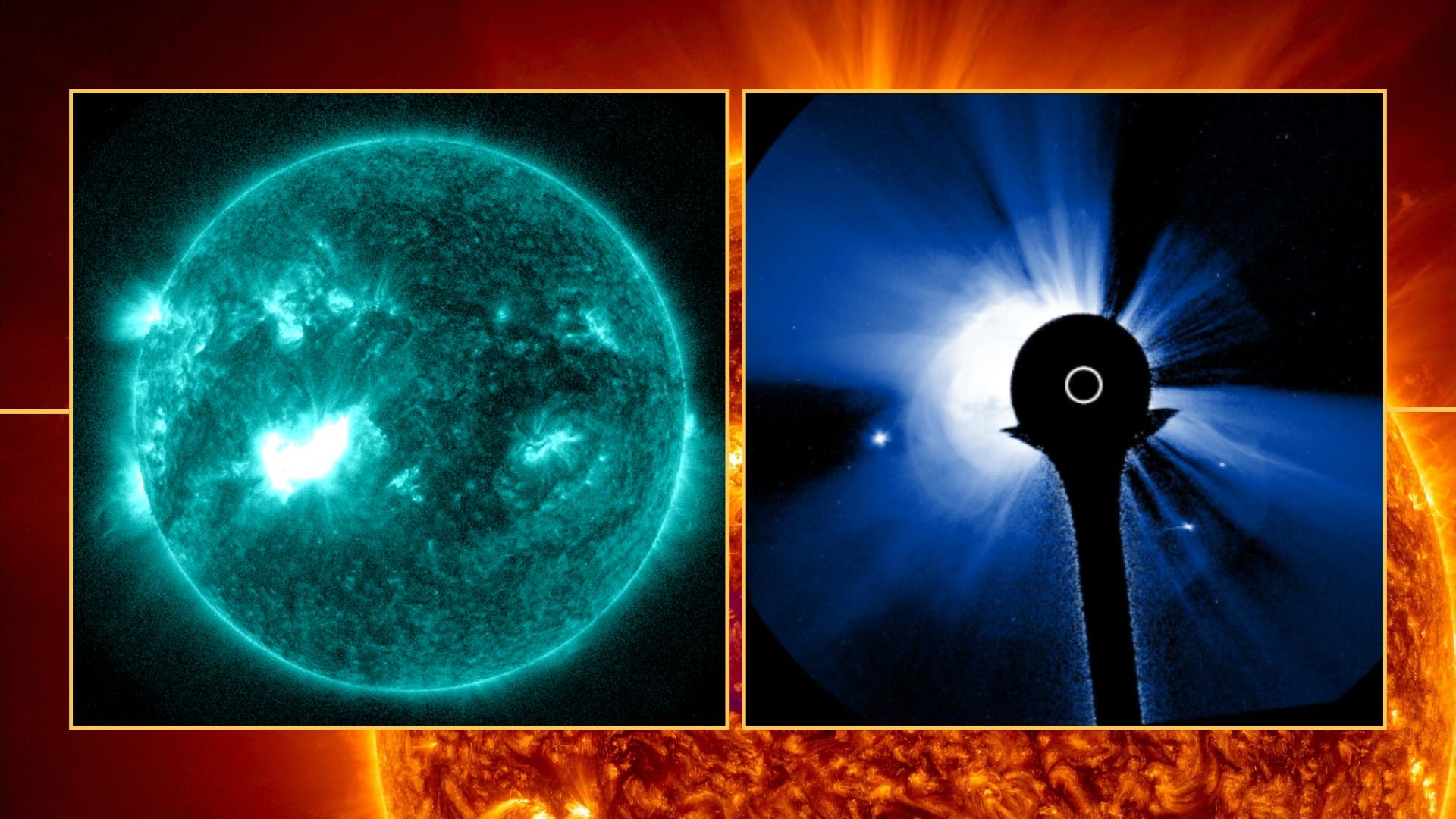
Also big correlation to earthquake I believe.
https://www.nature.com/articles/s41598-020-67860-3
It kind of makes sense, there’s a large mass of charged particles being deflected by the Earth’s magnetic field, so there must be some kind of corresponding force applied back to the field/the dynamo generating it. Interesting that the leading hypothesis is that it manifests piezoelectrically in rock.
Yeah I found the fact that its basically the piezoelectric effect (in reverse of how I’m used to thinking about it) at a massive scale, to be fascinating. I’ve always been interested in those fans you put on wood burning stoves, which take some heat energy to spin a fan.
What are the quantitative forces of a CME versus the Earth’s fields? I feel like any regular charged particle emissions from the sun would be far weaker than a planetary electromagnetic field, especially in terms of induction.
Yup there it is
There’s an app for that, and it’s called Carrington.
I’ve heard it described as like a sun burping.
EDIT: To be clear, I am referencing a scene from Star Trek: Discovery.
https://youtu.be/jXDTNtgPXB8
Kinda unnerving though relatively common I guess
I mean we’re in “solar maximum”, so no real surprises. We’ve only been able to closely monitor solar activity for a few decades though.