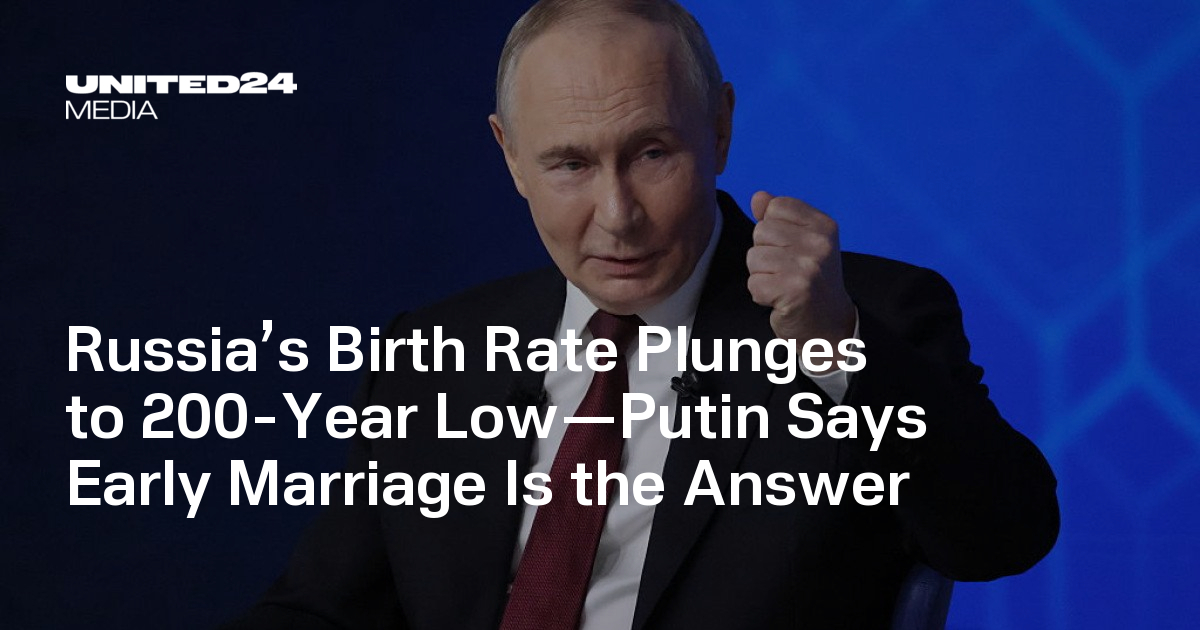
Russian President Vladimir Putin encourages early marriage to address declining birth rates, citing North Caucasus traditions during his recent call-in show.
You might get more births, but the problem is that it’s hard to both be a mother and be going through education, and you are putting a lot of your economic output at stake if you aren’t educating your females, because they’re half of your population.
I’d still do it in a society if there were no other working options to maintain a population, but I think that it’s liable to be very costly.
I’d be a lot more willing to (a) try to structure society to encourage births immediately post-education and (b) to shift more childrearing responsibility onto the state and have situations where there’s a greater ratio of children to adults in childrearing, like more of a daycare/boarding school type structure on steroids.
Those are going to have their own drawbacks. Sparta separated mothers from children at a pretty young age and had the state raise them. Israel’s kibbutzim movement tried communal childrearing, but it failed.
There’s obviously going to be risks inherent in reducing the role of the family structure.
But trying to roll things back…
You have to ask whether those risks rise to the very substantial portion of your GDP that you’re liable to be risking if you wind up seriously clobbering female education. We did used to have much higher fertility rates, younger mothers, larger families. So we know that we can very probably achieve higher birthrates that way if you roll things back. But we also used to have a much-less-educated female population, didn’t have that output. It’s not at all clear to me that you can achieve the fertility via that route without also sacrificing the education and the attendant economic output. If you blow something like half of your economic output on this and it turns out that you didn’t need to do so to bring demographics back into a sustainable state, it’ll be a lifetime before you can restructure society to get that output back.


You might get more births, but the problem is that it’s hard to both be a mother and be going through education, and you are putting a lot of your economic output at stake if you aren’t educating your females, because they’re half of your population.
I’d still do it in a society if there were no other working options to maintain a population, but I think that it’s liable to be very costly.
I’d be a lot more willing to (a) try to structure society to encourage births immediately post-education and (b) to shift more childrearing responsibility onto the state and have situations where there’s a greater ratio of children to adults in childrearing, like more of a daycare/boarding school type structure on steroids.
Those are going to have their own drawbacks. Sparta separated mothers from children at a pretty young age and had the state raise them. Israel’s kibbutzim movement tried communal childrearing, but it failed.
There’s obviously going to be risks inherent in reducing the role of the family structure.
But trying to roll things back…
You have to ask whether those risks rise to the very substantial portion of your GDP that you’re liable to be risking if you wind up seriously clobbering female education. We did used to have much higher fertility rates, younger mothers, larger families. So we know that we can very probably achieve higher birthrates that way if you roll things back. But we also used to have a much-less-educated female population, didn’t have that output. It’s not at all clear to me that you can achieve the fertility via that route without also sacrificing the education and the attendant economic output. If you blow something like half of your economic output on this and it turns out that you didn’t need to do so to bring demographics back into a sustainable state, it’ll be a lifetime before you can restructure society to get that output back.