
- cross-posted to:
- [email protected]
- cross-posted to:
- [email protected]
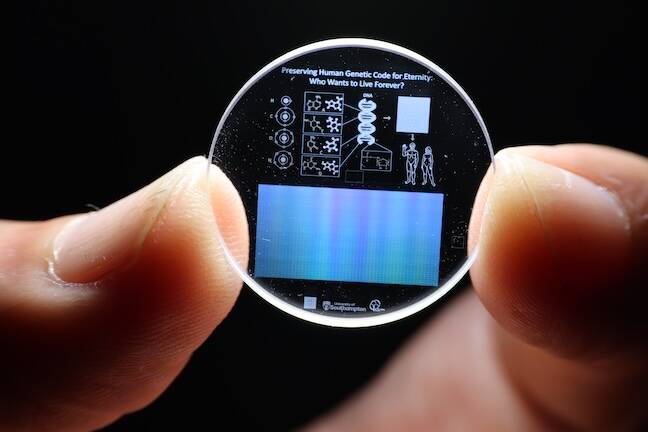
“the medium is silica crystal, similar to optical cable, it’s highly durable. It’s also capacious: The technology can store up to 360 TB of data on a 5-inch glass platter.”
“the medium is silica crystal, similar to optical cable, it’s highly durable. It’s also capacious: The technology can store up to 360 TB of data on a 5-inch glass platter.”
This is good news from the point of view of being able to create devices that can read these crystals; as a comment on the linked site says:
Tbh my own personal use case is getting buried with all of my data and become some kind of data-“Tollund man” in the year 4000, when they dig up my data cube and study it endlessly.
I expect them to build a reading device to do this; it’s the least I would expect if they want to study the holiday I was on in Bergen, or completely misunderstand the two hotdog pictures I happen to have as some kind of fellatio training device.
“Myes, we do believe family structures were loosely organised around the remote picture beaming devices that used to be called “te levision”
I’m thinking of it the same way, and not having the readers be trade secrets but published specs is good for future digital archeologists.
For example, Dyson uses trade secrets instead of patents, so it would be harder to recreate their tech in the future.
Edit: patents not parents 🤦