
As mentioned by @michaeldweiss on X:
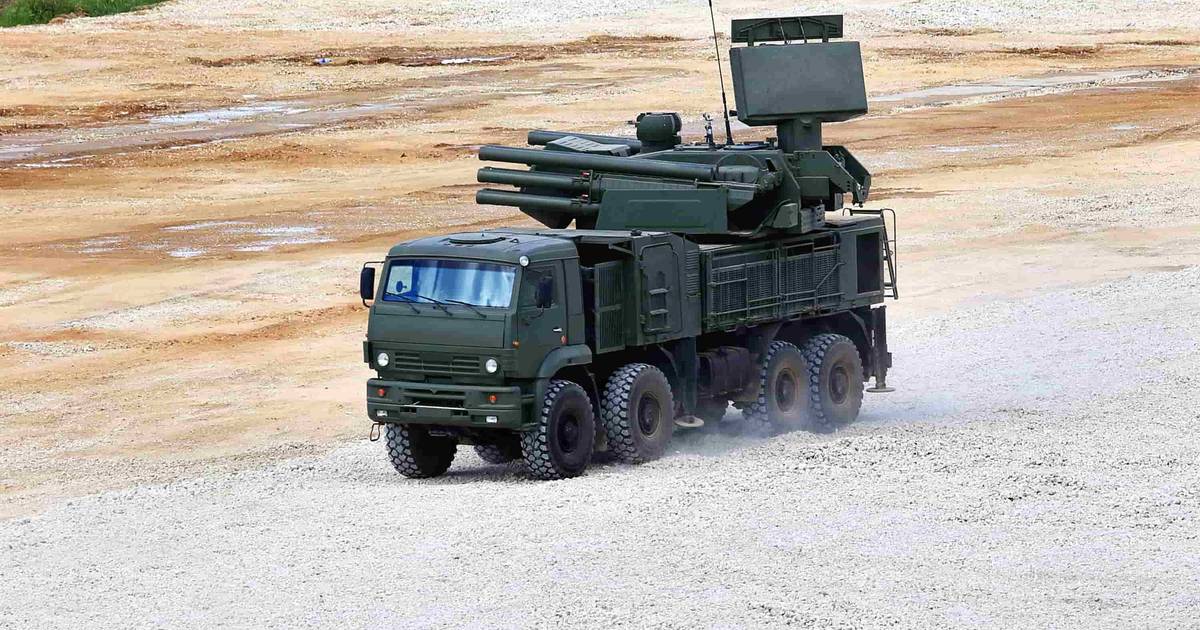
Critical new report on the vulnerabilities of the Russian S-400. The platform’s electronics are heavily reliant on Rogers, a company in the U.S., with loose export controls and a Chinese subsidiary; and on one in Kazakhstan, which has not been sanctioned. Also, the S-400’s guidance and control systems are made at two facilities in Russia – both within striking distance of Ukraine’s Flamingo cruise missile
Some key points
It is important to briefly cover who the operators of Russian SAMs are. Unlike the bulk of personnel in line units, SAM operators are overwhelmingly contract soldiers with significant technical and tactical training. Russian air defence systems have withstood modest damage [edit I might say “moderate” here? I wouldn’t call it “modest”] during the full-scale invasion of Ukraine, enabling the force to steadily build experience.
At the same time, the war has shown the dependence of the operators on operational integration to make the right decisions. When isolated, under pressure from multiple threats, faced with uncertainty as to the performance of their equipment, or simply exhausted, operators have made important errors, including shooting down friendly aircraft and even a civilian airliner.13 Understanding declining operator performance and their degree of confidence in their equipment is beyond the scope of this paper, but remains critical to effectively disrupting Russia’s IAMDS.
…
The Russians also rely on Western technologies to calibrate and measure the performance of their own radars. These are important for the initial acceptance of radars into service, but also for the continuous process of improving radar performance against threats.
…
Russia’s air defence enterprise is also vulnerable to physical attack, largely because of its concentration of functions around some key concerns. To take Pantsir complexes as an example, there are two primary KBP assembly sites: KBP’s main facility and Shcheglovsky Val (Figure 15). The cannons for Pantsir are produced by TulaTochMash and TsKBA, which also play a key role in the production of radars for the system. The primary assembly facilities, all located in Tula (Figure 15), are around 350 km from Ukraine and heavily defended. Ukraine’s attack drones lack sufficient payload or kinetic energy to damage many industrial targets and have so far failed to damage key facilities around Tula. However, as Ukraine’s stockpile of indigenous cruise missiles expands, the ability to reach and damage the relevant targets improves.
While the clustering of these sites enables the concentration of air defence, it also means that once the defences are saturated, all sites become vulnerable. Ukraine could, therefore, mount an operation to saturate the defences on an approach to Tula before delivering a significant blow to Pantsir production with cruise missiles – ironically resulting in limiting Russia’s ability to defend other targets over the course of 2026. These are but a fraction of the points of vulnerability identified in Russia’s integrated air defence production. A systematic effort to exploit these vulnerabilities could have a disproportionate impact on assisting Ukraine to strike the economic backbone of the Russian war effort and reduce the barriers to NATO airpower, consequently deterring future Russian aggression by denial
I am not sure I agree with RUSI that Russia is capable of sustaining this rate of loss of air defense systems, I can’t help but feel this article may have been partially in the works for quite awhile and the narrative in the last month or two has begun to shift to a point that while I don’t think any of the fundamental points of this article are wrong I do think it portrays Russia as much more capable of sustaining extensive air defenses losses than they are. The fact that Ukraine is able to hit these systems so regularly with cheap, inexpensive strike drones is itself a strategically unsustainable relationship for Russia and is indicative of the state of decay the Russian military is at. To be fair to the article it treats training as outside the scope of its consideration but I don’t know I just don’t think you can place training outside the scope of consideration when talking about air defense, air defense requires an ensemble of assets all working together that are trained in effectively collaborating to defeat waves of flying bombs, cruise missiles and other threats. It isn’t just that lots training is necessary to teach people how to know how to do their individual job with the equipment they are trained on in an air defense network, air defense is like making sure a boat has no leaks, it is a wholistic pursuit where if one part of the hull is bullshitting about not having a leak the whole ship sinks… and I think it is a very safe bet to say there is a metric fuckton of bullshitting about air defense in the Russian military (which isn’t to say that there aren’t also plenty of highly capable Russian air defenses and air defense crews especially on paper).
Time for the pink dildo of consequence.